
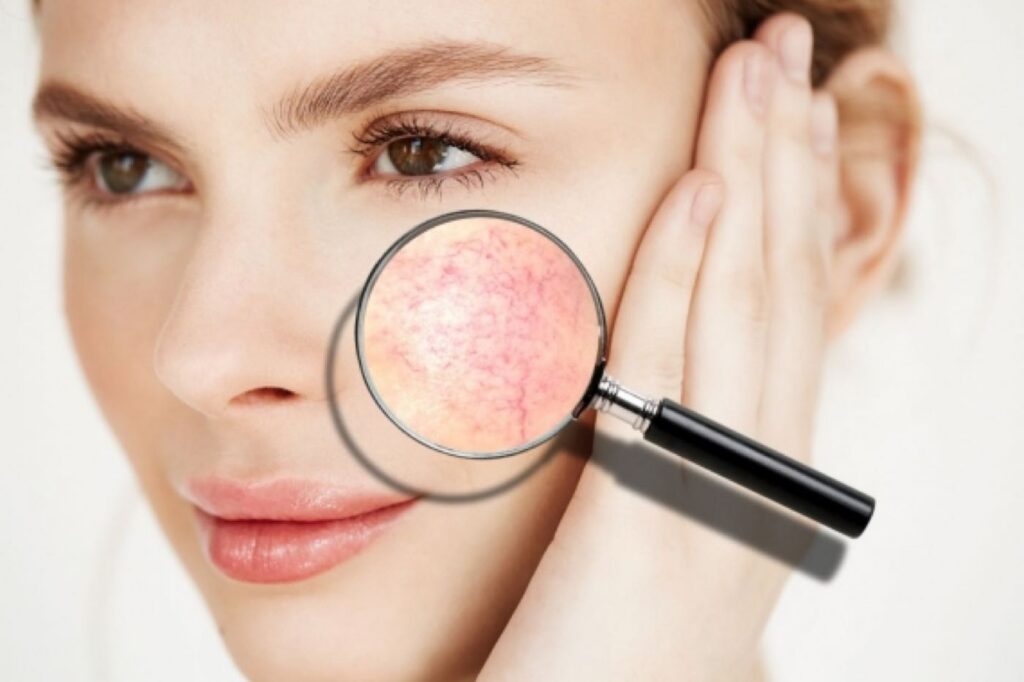
A fine network of blood vessels on different areas of the face is a sign of weak vessels. This imperfection most often appears on dry, thin, sensitive skin and is not easy to get rid of.
What couperose is and why it appears
Couperose on the face is a cosmetic flaw caused by dilated blood vessels. They show through the skin and look like “stars” or “spider webs”.
Couperose most often appears on the cheeks, chin and the sides of the nose. Spider veins on the skin point to fragile, weak vessels. Vessels that have lost their elasticity can no longer contract properly after strain, and poorer microcirculation affects how the skin is nourished. As a result, skin cells receive fewer nutrients and less oxygen, and metabolic waste is removed more slowly. Cell division slows down, so the upper layer of the skin renews itself less well. In such people wrinkles appear sooner, the skin turns greyish and becomes noticeably thinner.
This imperfection mainly affects people with thin, lightly pigmented skin of phototypes I and II.
It is worth noting that the sooner you start treating the condition, the easier it is to get rid of. If you see the first signs of rosacea, see a doctor straight away.
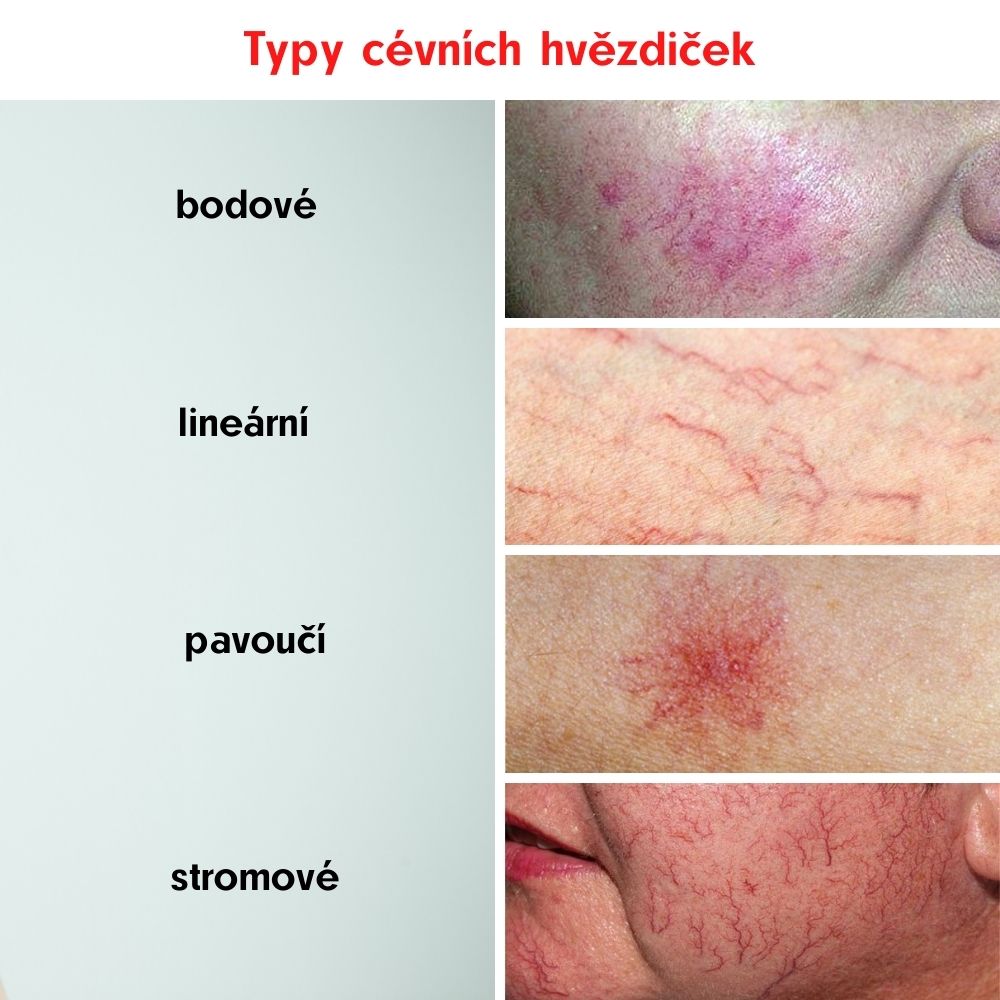
By their shape, rosacea spider veins are divided into:
- Spider-like
- Dot-like
- Linear
Stages of rosacea
Spider veins can appear at any age in both women and men. Statistics show, however, that the problem most often affects people over 35, and it usually appears where the skin is most sensitive – the neck, décolleté, face (especially the nose and cheeks) and legs.
Dermatologists distinguish 4 main stages of couperose:
Stage 1 – after a long stay in a hot environment with very dry air, irritation appears on the face. A few dilated capillaries show on the skin. The problem is local and mild, often barely noticeable. The key feature of this early stage is that the vessels are still elastic and the capillaries narrow and widen without risk of damage.
Stage 2 – over time, neighbouring dilated capillaries join into one network, and the vessels become more visible and take on a distinct colour.
Stage 3 – the vascular network is more noticeable, the redness no longer fades on its own and becomes permanent.
Stage 4 – the process affects not only the small vessels but all vessels on the surface of the face. Massive capillary spasms cause patches of blanched skin, and the capillaries are as visible as they can be. The vessel walls are so stretched that they are hard to restore. Circulation gets worse and fewer nutrients reach the deeper layers of the skin. At this stage medical help is needed urgently; self-treatment is not recommended.
What can make facial veins appear
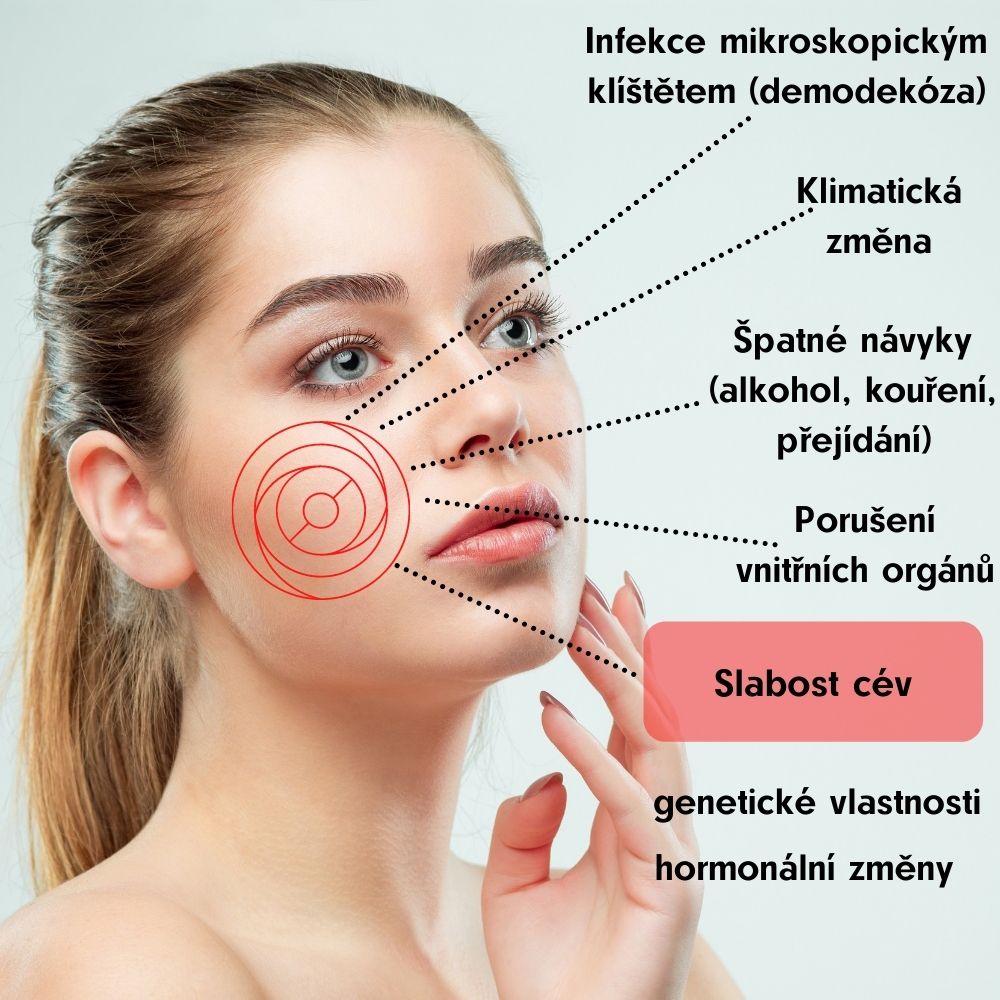
Genetic predisposition is considered the main cause of couperose. Low elasticity of the vessel walls can cause facial redness even in childhood. In young people it shows as flushing, while after 25 (once skin ageing begins) rosacea becomes visible and the branching vessels stand out clearly.
Couperose is caused by blood stagnating in the skin’s vessels: the walls of the stretched capillaries get thinner and show on the skin surface as a vascular network. This can make the skin more sensitive, dehydrated, irritated and flaky.
The main factors behind rosacea on the face:
- Vitamin deficiency, especially a lack of vitamins A and C;
- A thinned, weakened, reactive epidermis;
- Taking certain hormonal medicines;
- Hormonal changes in the body (an imbalance of oestrogen and progesterone), for example during pregnancy or menopause;
- Long exposure to very high or very low temperatures – cold-water swimming, overheating in the sun or in the bath, frostbite, long exposure to wind, sudden changes from frost to heat;
- High blood pressure;
- Bad habits (smoking, alcohol). Smoking clogs the vessels with tar and combustion products, which damages them. Alcohol dilates the vessels so the blood cannot flow normally;
- Too much sun causes not only photoageing – ultraviolet light also affects the vessels. Avoid spending a lot of time in the sun: the result can be not only sunburn but new skin problems;
- An unbalanced diet: very spicy or salty food is one of the factors that weaken the vessels;
- Autoimmune processes. An inflammatory reaction damages the inner lining of the small vessels;
- Chronic diseases of internal organs – digestive or liver problems, weakened immunity;
- Heavy physical exertion;
- Poor-quality or harsh home-care cosmetics;
- Cosmetic treatments that involve steaming the skin.
How to get rid of a red face with skincare?
Treating couperose on the face is a complex process. It is no longer just about covering it up with make-up but about a range of treatments that help at any stage of rosacea. Everything we use in the fight for clear, healthy skin falls into two groups:
- Home care
- Treatments at a salon or aesthetic medicine clinic
Unfortunately, skincare alone will not get rid of facial spider veins – visibly dilated vessels can only be reduced in combination with salon treatments. To stop the vascular network from coming back, it is important to choose the right care and use cosmetics for hypersensitive skin.
Depending on the main cause of blood stagnation, medicines, vitamin and mineral complexes or supplements may also be prescribed.
For effective care of skin prone to couperose, use products that:
- Reduce irritation and soothe the skin
- Reduce skin sensitivity
- Strengthen the capillary walls
- Replace abrasive products with gentle gommages and peels
Things to keep in mind for home care of rosacea-prone skin:
- Gentle cleansing. Do not rub the skin or scrub off your make-up. The cleanser must not contain harsh ingredients, and never use abrasive textures.
- A toner that strengthens the vessel walls and calms inflammation.
- For deep cleansing of rosacea-prone skin we use plant-based enzymes. Enzyme powders are excellent: they clean the skin thoroughly without traumatising it and are ideal for sensitive skin.
- Your face cream should contain ingredients that, like the toner, strengthen the blood vessels and calm inflammation.
Couperose treatment at the salon
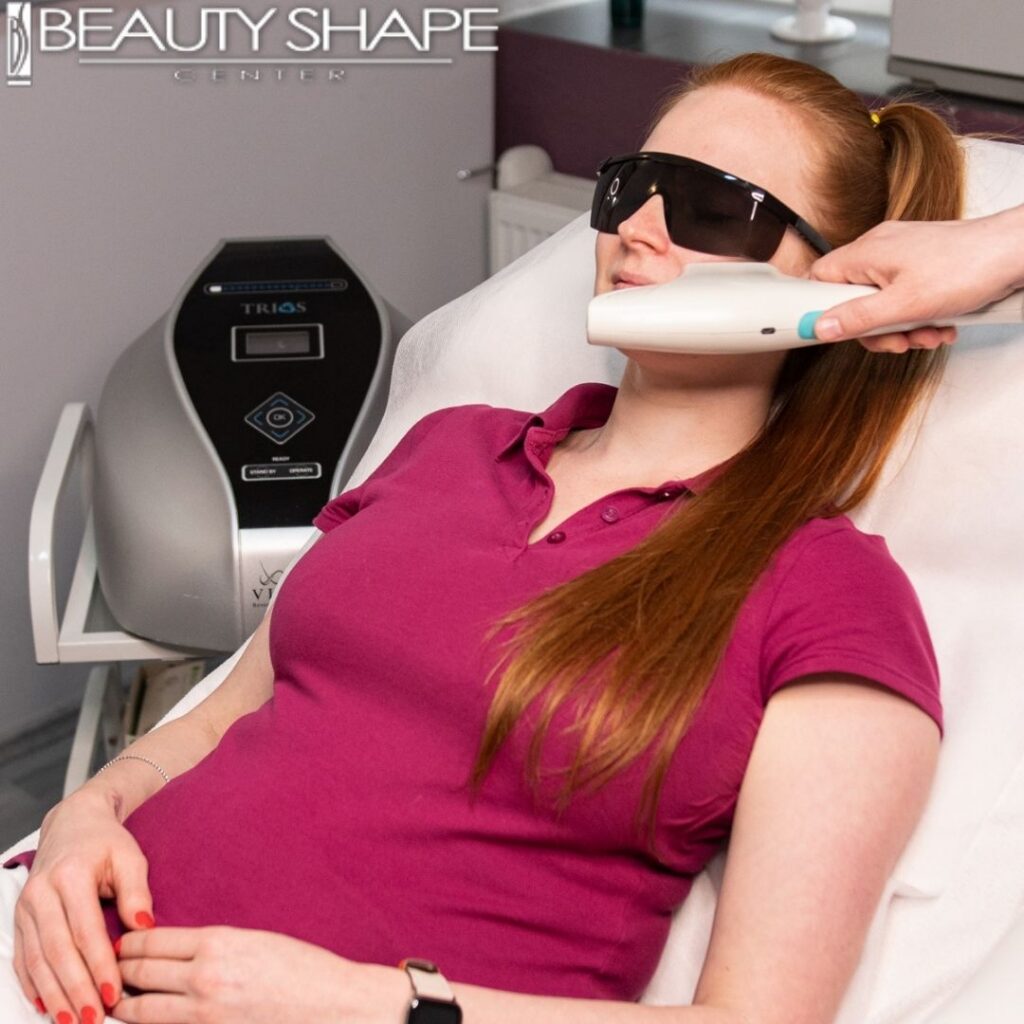
In the fight against facial spider veins, the IPL method (phototherapy) has proven itself.
Pulses of high-intensity IPL light are absorbed by the capillaries, making the vessels contract. Collagen production is also activated, which strengthens the vessel walls so they no longer burst as easily as before. IPL is safe for the surrounding tissue because it acts only on the damaged vessel, so scarring is ruled out.
For the desired result we recommend a rosacea course of 3 to 5 treatments (depending on the severity), 1–2 weeks apart.
After the course the redness drops significantly or disappears completely, and the result usually lasts about 1–2 years. But because the problem is physiological and caused by weak vessel walls, redness can come back under the influence of external factors and bad habits.
Biorevitalisation Aquashine HA BR.
Rosacea can also be treated with some injection procedures. The new Aquashine HA BR formula gives us another tool for treating rosacea on the face. It makes the vessel walls more elastic, so the vessels are healthier and less visible on the face.
Couperose on the face can be treated with an off-season peel. A special anti-couperose protocol reduces facial redness and strengthens the vessels.
Mesotherapy. The second injection treatment on our list delivers beneficial substances directly into the skin. A special cocktail starts the skin’s renewal from the inside. Combined with other therapy, mesotherapy can treat couperose on the face.
Important! Visible relief of symptoms does not guarantee that the vessels have fully recovered. After the treatments you need to take good care of your health: strengthen your vessels, change your lifestyle and look after your skin properly.
Can couperose be cured with a cream?
Unfortunately, you cannot get rid of couperose completely with cosmetics, masks, home remedies, exercise or self-massage – a dilated vessel will not disappear and will keep showing through the skin.
How to care for rosacea-prone skin: a dermatologist’s advice
When caring for skin with visible veins, follow these guidelines:
1. Choose hypoallergenic cosmetics for reactive skin;
2. Avoid products with a thick, greasy texture;
3. Do not use harsh products for deep cleansing: rough scrubs and acid peels;
4. Minimise temperature contrasts (go easy on hot baths and saunas);
5. Avoid pressing hard on the skin and vigorous facial massage;
6. In sunny weather always apply products with SPF.
Couperose will not cause you facial pain, but it creates plenty of cosmetic problems. Treating facial veins takes time, but with a skilled beautician and by following all the recommendations it is possible to get rid of it completely and have clear, healthy skin.